


Views: 0 Author: Site Editor Publish Time: 2026-10-20 Origin: Site


Global infrastructure demands flawless structural components. Picture a multi-lane highway overpass or a towering commercial high-rise. The safety of these massive structures relies entirely on perfect foundational parts. Casting heavy T-beams requires exact dimensional accuracy. Poorly constructed molds inevitably cause concrete bleeding, structural weak points, and costly project delays. Contractors simply cannot afford these setbacks.
In this comprehensive guide, you will learn how to select the best Precast Concrete T-Beam Formwork to achieve mass production without compromising on quality.
Key Takeaways
High-precision formwork is an indispensable asset for achieving the strict dimensional tolerances required in modern infrastructure construction.
Steel remains the superior material for precast T-beam molds, offering unmatched rigidity, longevity, and the capacity to withstand heavy external vibrations.
Modern selection criteria must prioritize hydraulic demolding features, adjustable dimensions, and integrated vibration systems to maximize factory output.
Partnering with an experienced manufacturer ensures you receive customized, intelligent formwork solutions tailored to specific load-bearing and span requirements.
A T-beam is a primary load-bearing structural element characterized by its distinct T-shaped cross-section. The top horizontal section, known as the flange, effectively resists compressive stresses. Meanwhile, the vertical web handles aggressive shear forces. A T-beam formwork system acts as the highly engineered rigid mold that dictates the final shape, structural integrity, and surface finish of this vital concrete component.
In a precast manufacturing environment, the formwork is far more than a temporary container. It is a sophisticated mechanical asset. It must securely hold the immense weight and hydrostatic pressure of wet concrete. It must maintain exact geometric proportions during the critical curing process and facilitate the safe tensioning of steel tendons before the pour.
While site-cast or in-situ formwork is assembled temporarily at the construction location, precast yard production operates under rigorous factory conditions. Consequently, the requirements for precast molds are significantly more demanding. Site-cast systems often prioritize lightweight transportability and flexibility for one-off pours.
By contrast, precast formwork demands extreme durability and reusability. A standard precast mold must endure hundreds, if not thousands, of intense casting cycles without any structural deformation. Moreover, precast systems integrate rapid assembly and disassembly mechanisms to support aggressive daily mass production schedules. This is a feature rarely prioritized in site-cast alternatives.
Recent industry analyses highlight a definitive shift towards automation and sustainability in civil engineering. Today's landscape faces unprecedented pressure to reduce carbon footprints while accelerating project timelines. How are top-tier facilities responding? Modern precast plants are abandoning disposable timber molds entirely. Instead, they are investing heavily in smart, highly reusable steel systems.
These advanced setups integrate thermal management and automated hydraulics. This technological shift not only minimizes material waste but also guarantees the strict tolerances demanded by contemporary structural codes. The industry is moving toward a standard where manual stripping is obsolete, replaced by synchronized hydraulic cylinders that protect both the workers and the delicate concrete edges.
In large-scale infrastructure projects, precast components are manufactured off-site and later transported for assembly. If a T-beam deviates by even a few millimeters, it can compromise the structural alignment of an entire bridge span. High-precision Computer Numerical Control machined formwork effectively eliminates these dangerous deviations.
By utilizing laser-cut steel plates and robotic welding, premium molds ensure that every cast beam fits perfectly into its designated structural node. A top-tier high-precision T-beam mold typically guarantees a dimensional tolerance of plus or minus 2 millimeters. This strict fidelity ultimately mitigates the need for expensive and time-consuming on-site modifications.
The aesthetic and structural quality of a concrete surface is directly tied to the mold used during casting. Precision-engineered formwork prevents mortar leakage and honeycombing. Honeycombing is a common defect where coarse aggregates are left exposed due to moisture loss. High-quality systems yield fair-faced concrete with a smooth, dense finish. This dense surface not only improves visual appeal but also significantly enhances the concrete's resistance to environmental degradation, requiring little to no post-casting repair.
On the factory floor, efficiency dictates profitability. Modern formwork systems are explicitly designed for speed. Features such as quick-release locking mechanisms, hydraulic panels, and integrated thermal curing systems allow for faster concrete maturity and quicker stripping times. This rapid turnaround enables plant operators to maximize their daily casting cycles, thereby increasing overall production capacity without the need to expand the factory footprint.
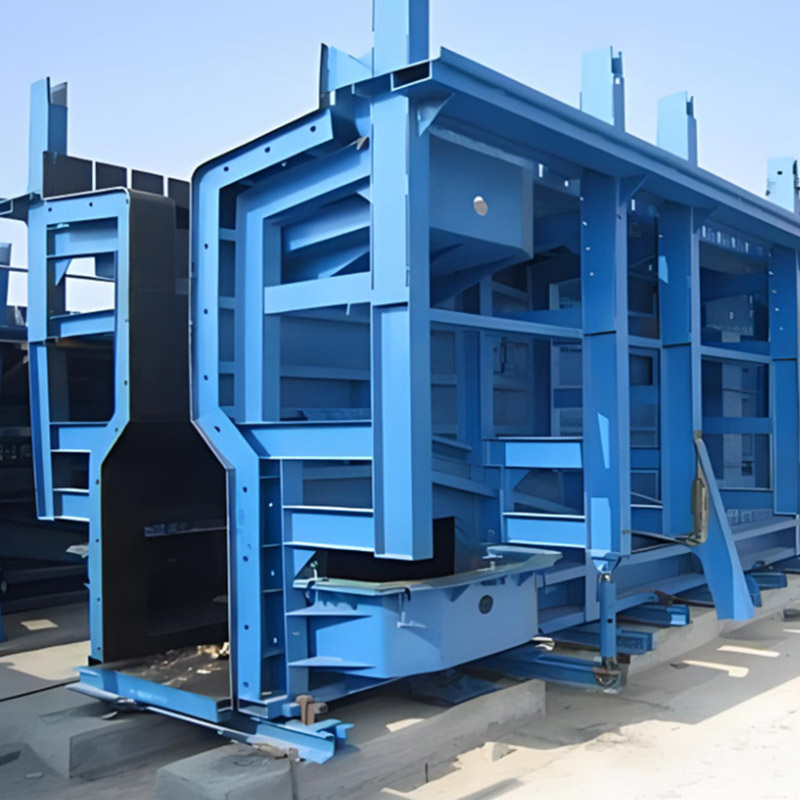
Selecting the right material for your molds dictates their lifespan, performance, and long-term return on investment. While various materials exist in the construction world, industrial precast operations heavily favor one specific option.
For high-volume precast factories, steel is the undisputed industry standard. Heavy-duty steel frames, often fabricated from Q235 or high-strength Q345 carbon steel, offer maximum rigidity. This ensures zero deflection under the immense hydrostatic pressure of wet concrete. Furthermore, steel is the only material robust enough to consistently withstand the high-frequency forces generated by external pneumatic vibrators without suffering from metal fatigue.
Specialized steel provides extreme longevity. With proper maintenance, a well-engineered steel mold can easily exceed 1,000 casting cycles. This durability drives the cost-per-use down to a fraction of what you would spend on alternative materials.
Aluminum formwork is highly valued in residential construction due to its lightweight nature and natural resistance to rust. However, it presents distinct limitations in heavy civil engineering. Aluminum possesses a lower modulus of elasticity compared to steel. This means it is much more susceptible to bending and deflection when subjected to the massive loads of infrastructure T-beams. Therefore, it is generally not recommended for high-stress precast applications.
Timber and engineered plywood are cost-effective and easy to modify on the fly. Yet, they are mostly relegated to low-repetition, highly customized one-off casts. Timber naturally absorbs moisture from the concrete, which can alter the delicate water-cement ratio and degrade the surface finish over time. It also splinters and breaks down rapidly under heavy vibration and mechanical stripping, making it entirely unsuitable for high-volume factory production.
Feature | Heavy-Duty Steel Q235/Q345 | Aluminum | Timber/Plywood |
|---|---|---|---|
Rigidity & Load Capacity | Excellent / Zero deflection | Moderate / Prone to bending | Low |
Reusability / Cycles | 500 - 1,000+ | 100 - 250 | 10 - 30 |
Vibration Tolerance | Exceptional | Fair | Poor |
Surface Finish Quality | High / Fair-faced | Good | Low to Moderate |
Procurement managers and structural engineers must meticulously evaluate formwork systems based on strict mechanical and operational criteria. Do not settle for generic specifications. The following factors are absolutely essential for ensuring safe, efficient, and high-quality production.
The formwork must withstand the intense lateral hydrostatic pressure exerted by wet concrete. This is a force that increases exponentially with the height and pour rate of the beam. Engineering teams must accurately calculate this pressure. You should look for structural frames comprising robust skin plates typically 5mm to 8mm thick, reinforced by heavy-duty stiffeners and walers. A perfectly rigid frame guarantees the geometric fidelity of the finished component.
Project specifications frequently shift. Selecting heavy-duty steel formwork systems with a modular design allows precast plants to adjust the mold for different beam lengths, varying web thicknesses, and specific flange widths. Adjustable side panels and interchangeable bottom soffits transform a single static mold into a highly versatile asset, saving significant capital expenditure on future infrastructure projects.
Stripping formwork manually from a massive concrete beam is physically exhausting. It also carries the constant risk of damaging delicate concrete edges. Modern systems utilize hydraulic stripping technology. Synchronized hydraulic cylinders gently and evenly pull the heavy steel panels away from the cured concrete. This innovation reduces labor hours, enhances worker safety on the factory floor, and prevents micro-cracking.
Proper concrete consolidation is necessary to remove trapped air voids and achieve maximum structural density. High-precision formwork includes pre-welded brackets strategically placed along the web and flange. These brackets securely hold external pneumatic or electric vibrators, ensuring that high-frequency vibrations are transmitted evenly throughout the entire mold without tearing the steel plates apart.
The precast concrete industry is undergoing a significant transformation. We are shifting rapidly from static, manually operated molds to dynamic, highly mechanized assets. For plant operators, understanding these technological advancements is critical for maximizing factory output and reducing long-term operational costs.
Traditionally, the assembly and stripping of heavy steel formwork required extensive manual labor, overhead cranes, and significant downtime. The introduction of intelligent hydraulic systems has fundamentally altered this workflow. Automated hydraulic formwork utilizes a series of synchronized hydraulic cylinders integrated directly into the robust structural frame of the mold.
Operated via a centralized control panel, these cylinders allow for the seamless, simultaneous opening and closing of the heavy side panels. This precise synchronization is crucial. Uneven pulling during the demolding process can easily cause spalling along the delicate edges of freshly cast concrete. By applying uniform, controlled pressure, hydraulic systems ensure the structural integrity of the T-beam remains uncompromised. Empirical data from leading precast facilities indicates that hydraulic demolding can reduce stripping time by up to 60%.
Concrete hydration is a highly temperature-dependent chemical reaction. In a high-volume precast plant, waiting days for a T-beam to reach its required stripping strength is economically unviable. To safely accelerate this process, modern formwork systems are frequently engineered with integrated smart curing technologies.
These advanced systems typically feature built-in steam curing pipes or thermal heating channels running along the exterior of the steel plates. When combined with insulated thermal covers, the formwork acts as a perfectly controlled micro-environment. Plant operators can precisely regulate the temperature gradient, ensuring the concrete cures evenly from the core to the surface. This controlled thermal management prevents thermal cracking and often allows for safe demolding within just 12 to 24 hours.
Casting large-scale structural components for infrastructure projects presents a unique set of engineering hurdles. T-beams demand exact dimensional tolerances because they carry heavy loads over long spans in bridges and highways. Even minor deviations during the pouring process can lead to severe structural weak points. A robust formwork system acts as your primary defense against these common casting defects.
In prestressed concrete applications, T-beams are engineered with a specific upward curve, known as camber. This counteracts the downward deflection that will occur once the beam is subjected to live traffic loads. Maintaining this precise camber during the casting phase is a critical challenge.
If the formwork lacks sufficient rigidity, the immense pressure of the wet concrete combined with the violent forces exerted during the tensioning process can cause the mold to warp. To effectively mitigate this, high-quality formwork is constructed using heavy-duty steel profiles and reinforced web stiffeners. This rigid skeletal structure ensures that the formwork remains completely unyielding under hydrostatic pressure, thereby preserving the pre-calculated camber.
The structural strength of a T-beam relies heavily on its internal reinforcement. This includes a dense matrix of steel rebar and high-tensile prestressing tendons. Accommodating this complex internal architecture requires formwork with highly precise internal dimensions and specialized end bulkheads.
Well-designed systems feature custom-machined end plates with exact drilling patterns. This allows prestressing cables to pass through without friction or dangerous misalignment. Furthermore, the formwork must provide ample clearance for tensioning jacks and secure anchoring points to safely manage the massive transfer of stress. Precision engineering at the bulkhead ensures that grout leakage is minimized around the tendon ducts, preventing honeycombing at the critical end zones.
Selecting a formwork system is not merely a material purchase. It is a strategic partnership that directly impacts the safety, efficiency, and profitability of your entire construction project. Procurement managers must evaluate potential suppliers based on their engineering capabilities, quality assurance protocols, and historical performance.
Off-the-shelf solutions are rarely sufficient for large-scale precast operations. Infrastructure projects often feature unique span lengths, varying load-bearing requirements, and highly specific cross-sectional dimensions. Therefore, it is imperative to partner with a manufacturer that possesses advanced custom engineering capabilities.
Leading suppliers utilize sophisticated 3D modeling software and Computer-Aided Design to create highly accurate digital twins of the formwork before fabrication begins. Additionally, reputable engineering teams will conduct Finite Element Analysis to simulate hydrostatic pressure and vibrational forces. This empirical approach ensures the steel frame is optimized for maximum rigidity, eliminating the risk of structural failure.
The durability of a formwork system is intrinsically tied to the manufacturing standards of the supplier. When evaluating a partner, buyers should closely scrutinize their fabrication facilities. Look for suppliers that strictly adhere to ISO 9001 quality management standards.
The fabrication process should ideally incorporate Computer Numerical Control laser cutting to ensure steel plates are cut to exact tolerances. Robotic welding is highly preferred over manual welding for structural components. Robotic welding guarantees consistent, deep-penetration seams that can easily withstand high-frequency vibrations without succumbing to metal fatigue.
Investing in high-quality precast concrete T-beam formwork is a direct investment in project safety, operational efficiency, and long-term profitability. While the initial capital expenditure for precision-engineered, hydraulic steel formwork may be higher than conventional lightweight alternatives, the return on investment is undeniable.
The ability to achieve hundreds of flawless reuses, drastically reduce manual labor, and eliminate on-site fitment issues makes premium steel formwork an indispensable asset for any modern precast plant. By carefully evaluating materials, load capacities, and automated features, procurement teams can properly equip their facilities to handle the most demanding infrastructure projects.
Ready to optimize your precast production? Consult with specialized engineers to design custom molds that meet your exact structural requirements. Equip your factory with the intelligent tools needed to elevate your manufacturing capabilities. Explore the full range of customized T-beam formwork solutions at JC Formwork to secure reliable, high-yield production assets for your next infrastructure project.
With proper maintenance, regular cleaning, and the consistent application of high-quality release agents, premium steel formwork is exceptionally durable. Empirical data from precast facilities shows that well-maintained steel molds can easily exceed 500 to 1,000 casting cycles, making them a highly cost-effective long-term investment for mass production.
Yes, advanced formwork systems feature modular designs. They utilize adjustable side panels, interchangeable bottom soffits, and flexible bulkheads. This modularity allows precast plant operators to efficiently alter the height, web thickness, and flange width of the molds to accommodate varying structural requirements without purchasing entirely new systems.
Hydraulic systems provide a smooth, synchronized retraction of the heavy steel panels. This uniform movement prevents sudden shocks or uneven pressure that can easily cause micro-cracking on the concrete surface. Additionally, it drastically reduces manual labor time, accelerates the production cycle, and significantly improves workplace safety on the factory floor.
Leakage is prevented through high-precision machining that ensures extremely tight tolerances between the steel plates. Furthermore, high-quality rubber sealing strips and precisely machined chamfer profiles are installed at all critical joints. These seals expand slightly under pressure, effectively blocking any mortar or water from bleeding out during high-frequency vibration.
Strict engineering codes dictate that high-quality T-beams must maintain a dimensional tolerance of plus or minus 2 millimeters. Achieving this requires highly rigid steel molds that will not deflect under the immense hydrostatic pressure of wet concrete.
Routine maintenance is non-negotiable for maximizing lifespan. Operators must thoroughly clean the steel plates after every stripping cycle and apply a premium chemical release agent. Storing the panels in a dry environment and addressing minor surface scratches immediately prevents oxidation and ensures a consistently smooth fair-faced concrete finish.


