


Views: 0 Author: Site Editor Publish Time: 2026-10-20 Origin: Site


Modern infrastructure demands fast, reliable, and aesthetically pleasing construction methods. Urban populations continue to swell at an unprecedented rate. Expansive transit networks, highway overpasses, and pedestrian bridges are no longer optional; they are critical lifelines. How do engineering teams manufacture the massive structural elements required for these mega-projects? The answer lies in absolute precision.
The global construction sector is currently undergoing a massive operational shift. Skilled labor shortages and increasingly aggressive project deadlines are forcing a departure from traditional on-site pouring. Consequently, civil engineering has rapidly pivoted toward Accelerated Bridge Construction techniques. Off-site precasting is now the industry baseline. Market data shows a surging reliance on automated manufacturing solutions to mitigate on-site risks and weather-related delays.
Precast concrete U-girders have emerged as the top-tier solution for heavy-load and long-span structures. Their unique geometry offers unmatched structural efficiency. Yet, the successful fabrication of these components relies entirely on the quality of the molds used to shape them. Resolving the specific challenges of dimensional accuracy and rapid production requires highly specialized equipment. Ultimately, deploying dedicated U-Beam Formwork for Precast Concrete is the secret to maintaining strict project schedules and ensuring structural integrity.
Key Takeaways
Precision & Quality: Engineered steel U-beam formwork ensures exact dimensional tolerances and a highly consistent, fair-faced surface finish.
Accelerated Construction: Transitioning to off-site precasting with mechanized formwork systems measurably reduces on-site labor requirements.
Superior ROI: The exceptional reusability of heavy-duty steel molds drastically lowers the long-term cost-per-cast.
Enhanced Safety: Modern systems utilize integrated hydraulic mechanisms that minimize manual material handling.
Structural Integrity: Dedicated formwork supports the precise casting of U-girders, which are favored globally for their exceptional torsional stiffness.
U-beam formwork is not your average temporary wooden mold. It is a highly engineered, heavy-duty steel system designed specifically for casting U-shaped concrete girders in a controlled manufacturing environment. Picture a bustling precast yard. Hundreds of tons of wet concrete are poured simultaneously. The mold must hold firm. This robust construction is absolutely vital to withstand the immense hydrostatic pressure exerted during the pouring and high-frequency vibration phases.
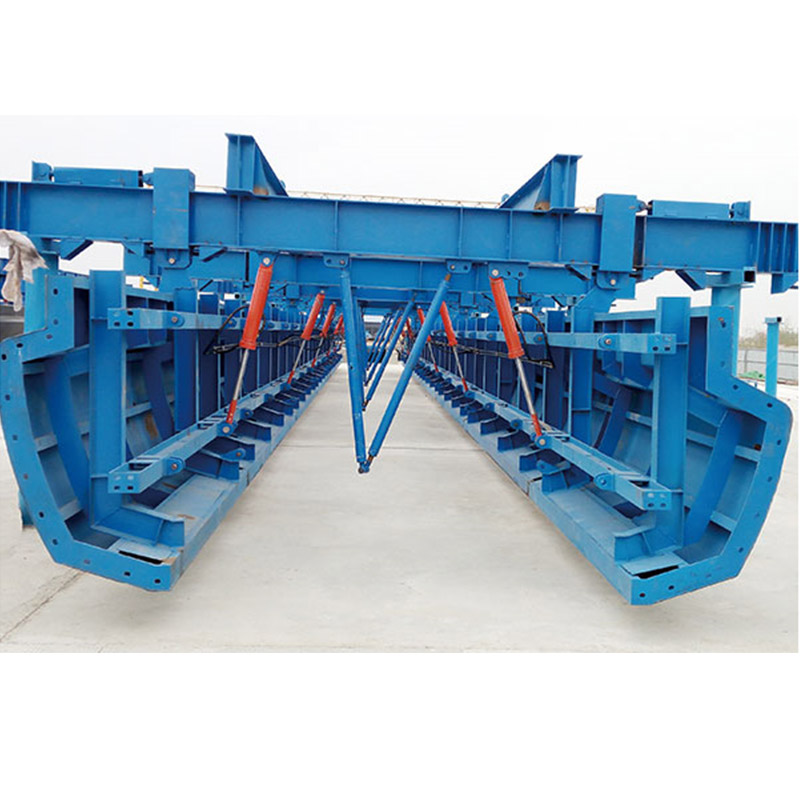
The anatomy of a standard precast U-beam mold consists of several interlocking steel components. It features adjustable side forms that shape the exterior walls, collapsible inner molds that create the hollow central trough, and rigid bottom soffits that support the immense base weight of the curing girder. Advanced systems take this operational efficiency a step further. They incorporate hydraulic opening and closing mechanisms alongside integrated vibration and steam-curing networks.
In modern civil engineering, centralizing operations in precast yards allows contractors to produce identical, high-strength structural components continuously. This assembly-line efficiency completely insulates the project timeline from the unpredictable delays of adverse weather conditions.
Before examining the mechanics of the formwork itself, we must understand why bridge designers increasingly specify U-girders. The unique geometry provides distinct functional advantages over traditional I-beams, T-beams, or standard box girders.
Torsional stiffness refers to a structural element's inherent ability to resist twisting forces. The semi-closed, trough-like nature of a U-shaped cross-section distributes shear stresses much more efficiently than an open I-beam configuration. This remarkable resistance to torsion makes U-girders the optimal choice for curved bridge sections and elevated transit viaducts where eccentric loading occurs frequently.
In practical terms, the hollow central corridor is a massive engineering advantage. This architectural feature provides a secure, hidden pathway for routing essential municipal infrastructure. Engineering teams routinely utilize this internal space to house high-voltage electrical cables, water drainage pipes, and transit signaling equipment. Keeping these utilities internal protects them from harsh environmental degradation and simplifies future maintenance access.
Urban infrastructure planning increasingly prioritizes environmental impact mitigation. U-girders offer a low-profile appearance that blends seamlessly into dense cityscapes. Beyond visual appeal, they serve a highly practical acoustic function. For light rail and metro viaducts, the thick vertical side walls act as natural sound barriers. They effectively contain the noise generated by wheel-to-rail contact, drastically reducing noise pollution in nearby residential areas.
Relying on highly engineered specialized U-beam formwork for precast concrete is no longer just an option. It is a strategic necessity for contractors aiming to remain competitive and profitable.
Precast concrete components must fit together flawlessly upon arrival at the final construction site. Even a microscopic deviation of a few millimeters can cause cascading delays during the erection phase. Rigid steel formwork prevents common structural issues like concrete blowout, bulging, or mid-span warping. The heavy-duty steel frame ensures that the web thickness, flange width, and overall length remain perfectly consistent across hundreds of casting cycles.
In a commercial precast yard, operational efficiency is measured by cycle times. How fast can you prepare the mold, pour the concrete, and extract the finished beam? Modern formwork systems utilize advanced hydraulic technology to exponentially expedite this process. Contrast a crew spending hours unbolting manual tie-rods in the blistering sun with a single operator engaging a hydraulic pump station. Massive steel side panels smoothly glide away from the cured concrete in mere minutes.
The aesthetic appeal and long-term durability of a concrete girder are heavily influenced by its surface finish. Premium steel plates provide a smooth, impermeable barrier against the wet concrete mix. This prevents unwanted moisture absorption and results in a dense, flawless, fair-faced concrete finish straight out of the mold. Achieving this high level of surface quality immediately eliminates the need for labor-intensive post-cast cosmetic grinding.
Precast concrete must be properly consolidated to achieve massive compressive strength. High-frequency pneumatic or electric vibrators mount directly to the external steel ribs of the formwork. These devices transmit powerful vibrations that force trapped air bubbles out of the concrete mix, ensuring dense consolidation around complex rebar cages. Additionally, internal steam curing pipes allow operators to apply controlled heat directly to the mold, dramatically accelerating early strength development.
The initial capital expenditure for custom steel formwork is undeniably higher than temporary timber alternatives. However, procurement managers must look beyond the initial price tag. Evaluating formwork based on its lifecycle costs reveals substantial long-term profitability.
Steel U-beam formwork boasts exceptional longevity. With rigorous routine maintenance and the proper application of chemical release agents, premium steel molds withstand thousands of casting cycles without structural degradation. This incredible reusability factor rapidly drives down the cost-per-unit. For a transit project requiring 800 identical U-girders, the formwork cost amortized across the entire production run becomes highly economical.
Labor constitutes a massive portion of any manufacturing budget. Traditional piecemeal formwork requires extensive manual labor for daily assembly, clamping, and stripping. Investing in hydraulically operated formwork allows precast yards to operate efficiently with significantly leaner crews. Mechanization directly reduces daily operational expenses and mitigates the risk of sudden labor shortages.
Precision formwork systematically eliminates material waste. Poorly designed molds often suffer from grout leakage at the panel joints, which wastes expensive high-strength concrete and creates structural weak points known as honeycombing. High-grade steel formwork features tightly machined joints equipped with durable rubber seals that prevent any leakage.
During the initial planning phase, engineering teams face a critical decision. Should they cast U-girders directly on-site or manufacture them in a dedicated facility? Industry data overwhelmingly favors the precast method.
Casting concrete in place exposes the delicate curing process to unpredictable variables. Temperature fluctuations and sudden downpours can severely impact the water-to-cement ratio. In stark contrast, a precast yard operates like a controlled manufacturing facility. Regulating curing temperatures perfectly guarantees that every single girder achieves exact structural tolerances, resulting in a drastically lower rejection rate.
Constructing massive bridges over active highways poses severe logistical nightmares. Cast-in-place construction requires extensive scaffolding and prolonged lane closures. By shifting the manufacturing process to an off-site yard, girders are delivered ready for immediate installation. They are hoisted into place during brief, scheduled overnight windows, drastically minimizing localized site disruption.
Working at elevation introduces severe risks. Cast-in-place U-girders require laborers to assemble heavy rebar cages and pour wet concrete while suspended dozens of feet in the air. Precasting fundamentally alters this risk profile. All assembly and pouring occur safely at ground level. The heavy-duty steel formwork provides a stable working platform, notably lowering the frequency of workplace incidents.
Metric | Precast Method (Steel Formwork) | Cast-in-Place Method |
|---|---|---|
Quality Control | High; controlled environment, precise steel molds. | Variable; subject to weather and site conditions. |
Construction Speed | Fast; simultaneous off-site casting and on-site prep. | Slow; sequential process dependent on curing times. |
Site Disruption | Minimal; girders are delivered ready for installation. | High; requires extensive scaffolding and road closures. |
Worker Safety | High; ground-level work in a controlled facility. | Lower; requires working at heights with temporary supports. |
Selecting the correct formwork manufacturer dictates the operational efficiency of the entire precast yard. Not all steel molds are created equal. Procurement managers must rigorously assess mechanical design, material specifications, and overall adaptability against frontline engineering standards.
The structural integrity of the mold directly dictates the dimensional accuracy of the final concrete girder. If the formwork lacks sufficient rigidity, the steel plates will warp under the immense hydrostatic pressure of wet concrete. High-strength structural steel, specifically Q345 or Q235 grades, must be used for the main load-bearing frames. Furthermore, automated submerged arc welding ensures consistent, deep-penetration welds that prevent structural fatigue over the lifespan of the equipment.
The process of stripping a mold from a cured concrete girder is notoriously labor-intensive when using standard mechanical bolts. Advanced precast U-beam formwork must feature integrated hydraulic cylinder systems. Hydraulic cylinders are strategically mounted along the exterior ribs of the side forms. With the simple activation of a localized pump station, the side molds simultaneously and smoothly retract. Investing in hydraulic functionality is mandatory for projects with strict daily production quotas.
Infrastructure projects rarely feature perfectly uniform spans throughout their entire length. A viaduct may require standard 30-meter girders for straight sections, but shifting topographies might necessitate 28-meter or 32-meter variations. Procuring rigid, single-size formwork severely limits operational flexibility. High-quality systems incorporate adjustable bottom soffits and insertable bulkheads. These smart features allow yard operators to modify the casting length seamlessly without purchasing an entirely new mold system.
The unique geometric properties and exceptional structural efficiency of precast U-girders have made them the preferred engineering choice for a wide variety of modern infrastructure developments worldwide.
The most prominent application of precast U-girders is in the rapid construction of elevated light rail and metro systems. In dense urban environments, minimizing visual obstruction is a primary design directive. The U-shape inherently provides a much lower profile compared to traditional box girders. More importantly, it safely cradles the train cars, providing built-in derailment protection.
In highway construction, minimizing traffic disruption is the ultimate metric for project success. Precast U-girders perfectly facilitate Accelerated Bridge Construction methodologies. Because the massive girders are manufactured off-site to exact specifications, construction crews can quickly demolish an aging overpass and install the new structural elements over a single weekend.
Beyond heavy transit loads, U-girders are increasingly utilized for pedestrian infrastructure. Modern architects heavily favor the sleek, continuous lines of the U-shape. The hollow trough provides a natural, secure walkway, while the vertical side walls naturally form the base of the pedestrian parapet or safety railing system.
The undeniable synergy between high-quality precast concrete U-girders and the specialized formwork required to shape them is the foundation of modern infrastructure development. As the demand for faster, safer, and more durable construction methods continues to rise, shifting away from outdated cast-in-place methods is no longer optional.
Investing in premium, engineered steel molds guarantees that every structural element meets exacting engineering tolerances. Beyond structural safety, it drastically improves project speed, reduces reliance on manual labor, and eliminates costly material waste. Procurement teams must view advanced formwork as a core asset that drives long-term profitability.
Are you ready to optimize your precast yard operations? To guarantee the success of your next major infrastructure project, explore industry-leading U-Beam Formwork for Precast Concrete U-Girders from JC Formwork. Deploying a custom, hydraulically optimized solution tailored specifically to your site's unique engineering demands is the most effective way to ensure your project stays ahead of schedule and under budget.
With rigorous maintenance protocols, regular high-pressure cleaning, and the proper application of quality release agents, steel U-beam formwork is incredibly durable. Industry standards indicate that a well-maintained, high-grade steel mold can reliably execute hundreds to over a thousand casting cycles before requiring any significant structural refurbishment, providing an excellent return on investment.
Standard mechanical formwork relies heavily on manual labor to unbolt, adjust, and strip the mold panels using overhead cranes. In contrast, hydraulic formwork integrates mechanized cylinders and dedicated pump stations to automatically retract and close the heavy steel side walls. This technological upgrade eliminates heavy manual labor, drastically speeds up the demolding process, and prevents accidental damage to the concrete's surface finish.
Yes. Premium U-beam formwork systems are specifically engineered with modularity in mind. Manufacturers supply insertable bulkheads and adjustable base frames, allowing precast yard operators to alter the length of the casting area to accommodate varying girder dimensions without the need to purchase an entirely new mold system.
Precast U-girders feature complex geometric shapes and highly dense rebar cages that can obstruct the flow of wet concrete. Attaching external pneumatic or electric vibrators directly to the steel formwork frame ensures that the poured concrete flows smoothly into every corner and around all reinforcement. This critical process eliminates trapped air pockets, known as honeycombing, and guarantees the girder achieves its required structural density and compressive strength.
Standard dimensional tolerances for precast infrastructure are exceptionally tight, typically within a few millimeters. Precision steel formwork ensures that the overall length, web thickness, and flange width strictly adhere to international bridge construction codes. Maintaining these strict tolerances prevents cascading alignment issues and structural imbalances during the final erection phase.
Unlike manual mechanical systems that can take several hours and a large crew to strip, advanced hydraulic formwork allows a single operator to retract the side panels and demold a cured girder in under 30 minutes. This rapid turnaround capability is essential for precast facilities looking to maintain aggressive daily casting quotas.


