


Views: 0 Author: Site Editor Publish Time: 2026-10-20 Origin: Site


Did you know crane dependency causes major construction delays? Picture the visceral sway of a suspended load at 500 feet above ground. Vertical projects demand absolute safety and rapid execution at extreme heights. Traditional methods often fail to meet strict project timelines, leaving contractors battling unpredictable weather and logistical bottlenecks. In this post, you will learn how to navigate the complex procurement process of vertical construction equipment. Specifically, we will explore how integrating a Heavy-Duty Climbing Formwork System serves as the ultimate engineering solution for efficient, repetitive concrete pouring on your next job site.
Before diving into technical specifications and procurement considerations, it is essential to outline the core concepts that drive the selection of vertical construction equipment. Decision-makers must evaluate multiple variables to ensure project viability.
System Variations: Understanding the mechanical differences between jump form, standard guided climbing, and automatic self-climbing setups is critical for matching equipment to site logistics.
Application Matching: The structural geometry of a project dictates the equipment. High-rise core walls require drastically different configurations compared to inclined bridge piers.
Buyer Checklist: Procurement officers must rigorously evaluate primary factors such as load-bearing capacity, crane availability, wind resistance, cycle times, and spatial constraints.
ROI and Safety Parameters: Strategic investment in premium equipment mitigates safety hazards, reduces long-term labor costs, and accelerates floor-to-floor cycle times.
In large-scale vertical construction, this equipment functions as an engineered structural solution designed to facilitate repetitive concrete pouring at significant elevations. The designation heavy-duty refers to the structural integrity of the system and its capacity to withstand massive hydrostatic concrete pressures. These robust platforms support expansive multi-level working areas and operate safely under extreme environmental conditions. Unlike traditional scaffolding or ground-supported formwork, these advanced structures anchor directly into previously cast concrete. This direct anchoring allows construction to progress upward systematically.
The operational mechanism follows a highly structured, repetitive cycle engineered to maximize efficiency while maintaining absolute structural safety. The process begins with the initial assembly of the panels and the first concrete pour. Once the concrete reaches the required curing strength—typically around 15 MPa for safe climbing—the panels are detached and retracted slightly from the concrete surface. Rather than dismantling the entire setup, the system is elevated to the next vertical casting section via a site crane or integrated hydraulic mechanisms. The climbing brackets are then secured to pre-installed anchor cones embedded in the newly cured concrete. Finally, the formwork is closed, paving the way for the next sequence of rebar installation and pouring.
To fully grasp how these systems support massive loads, buyers must familiarize themselves with the primary engineering components.
Formwork Panels: These shape the concrete and contain hydrostatic pressure during pouring. They must be constructed from high-yield steel or aluminum frames.
Climbing Brackets: These transfer the load of the formwork, platforms, and workers directly to the structure. Standard brackets often boast load capacities exceeding 50 kN per unit, forming the backbone of the climbing operation.
Anchoring System: This secures the climbing brackets to the cured concrete wall using embedded anchor cones and high-tensile tie rods.
Trailing Platforms: These are suspended levels below the main deck that provide safe access for concrete finishing, anchor retrieval, and subsequent structural inspections.
Hydraulic Cylinders: Exclusive to self-climbing models, these lift the entire assembly. They eliminate crane dependency through synchronized lifting mechanics capable of raising massive loads at speeds of approximately 5 minutes per meter.
Selecting the appropriate system requires a clear understanding of how the equipment ascends. Procurement decisions should be heavily influenced by crane availability, project height, and budget constraints. To simplify the decision-making process, the table below highlights the core differences between the three primary systems.
System Type | Crane Dependency | Wind Resistance | Ideal Application | Average Cycle Time |
|---|---|---|---|---|
Jump Formwork | 100% Dependent | Low to Moderate | Low-to-mid-rise buildings, silos | 5 to 7 days |
Guided Climbing | 100% Dependent | High | Mid-rise structures, constant cross-sections | 4 to 6 days |
Hydraulic Self-Climbing | Zero Dependency | Extremely High | Skyscrapers, bridge pylons, mega-projects | 3 to 4 days |
Recent market analyses highlight a definitive pivot toward automated vertical construction solutions. Driven by chronic skilled labor shortages and increasingly stringent urban safety mandates, modern contractors are actively abandoning traditional setups. The global construction sector is witnessing a surge in hydraulic automation. Furthermore, the integration of Building Information Modeling has revolutionized pre-construction planning. Project engineers can now simulate the entire climbing sequence digitally before a single bracket is bolted on-site. This digital-first approach ensures that any deployed advanced climbing formwork is perfectly synchronized with the architectural geometry. Consequently, on-site modifications decrease drastically, accelerating overall project delivery.
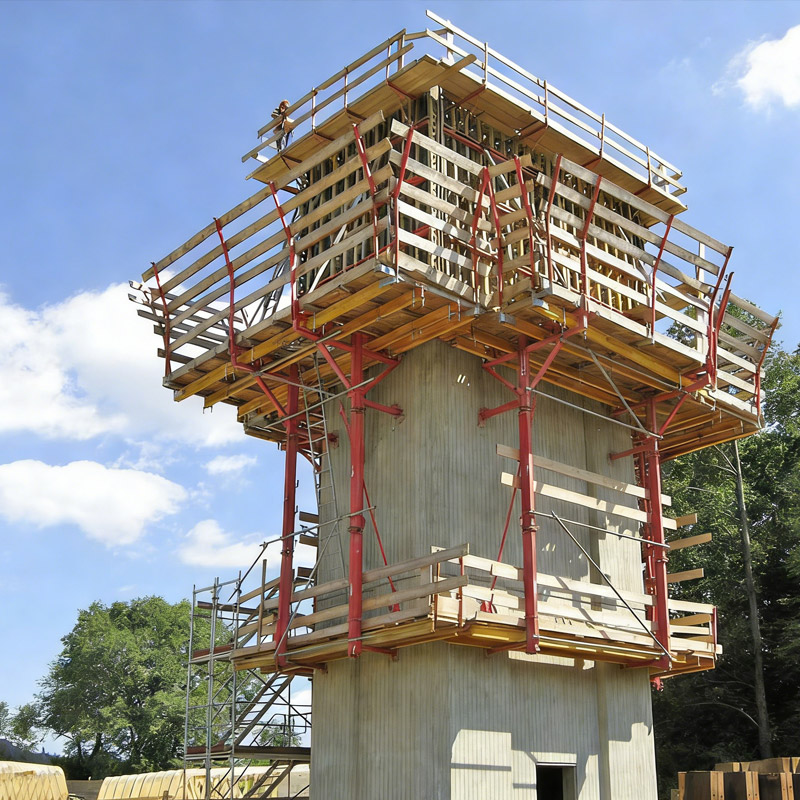
The geometric and logistical demands of a project dictate the specific engineering requirements of the chosen equipment. Buyers must evaluate architectural blueprints meticulously to ensure the system can adapt to structural variations.
In commercial and residential high-rise construction, the elevator shaft and central core wall typically form the critical path determining overall project speed. Implementing a self-climbing system allows core wall construction to advance independently of the surrounding floor slabs. This decoupling strategy enables contractors to achieve aggressive cycle times, often completing a new floor every three to four days with pouring heights up to 4.5 meters per step. The system must accommodate internal shaft corners, trailing platforms for concrete patching, and integrated concrete placing booms to maximize vertical efficiency.
Infrastructure projects present distinct and often unforgiving engineering challenges. Bridge piers frequently feature inclined profiles, tapering cross-sections, and complex geometric curves. Therefore, equipment deployed for bridge construction must possess high degrees of adjustability. The climbing brackets must articulate smoothly to adapt to changing wall angles. Moreover, bridge projects are often situated over open water or deep valleys, exposing workers to extreme weather. Fully enclosed, weather-shielded platforms become non-negotiable requirements in these harsh environments.
Procurement officers and project engineers must analyze several critical criteria before making a capital investment. The following factors form a comprehensive framework for selecting the right equipment.
The primary function of any formwork is to withstand the hydrostatic pressure of wet concrete. For high-rise structures and massive bridge piers, this pressure is immense. Engineers must calculate the concrete pouring rate, curing temperature, and the specific weight of the mix to determine the required load-bearing capacity. Premium systems are engineered with robust steel or high-grade aluminum walers that resist deflection under extreme loads up to 80 kN per square meter. If a structure features a varying cross-section, the chosen system must offer flexible panel configurations to adapt to changing angles without requiring complete reassembly.
Crane dependency remains one of the most significant bottlenecks in vertical construction. Project managers must conduct a strict logistical analysis of tower crane availability. On congested sites where cranes are constantly required for lifting rebar, structural steel, or mechanical equipment, investing in hydraulic heavy-duty climbing formwork systems becomes mandatory. By removing the formwork from the daily schedule of the crane, overall site productivity increases exponentially.
At elevations exceeding 100 meters, wind speeds become a critical safety and operational hazard. Traditional setups often face costly downtime because crane operations must halt during high winds. Guided climbing systems and hydraulic self-climbing setups mitigate this risk effectively. Because they remain structurally anchored to the concrete wall via continuous guide rails during the entire lifting process, they can operate safely in much higher wind velocities. Systems equipped with full-perimeter wind shields further protect workers and prevent weather-related delays.
In commercial high-rise construction, the cycle time per floor directly dictates the financial viability of the project. Evaluating the hydraulic lifting speed, the ease of detaching panels, and the time required to install tie-rods is essential. Automated systems streamline the stripping and climbing phases. This automation allows contractors to maintain a strict, repetitive schedule independent of the floor slab construction happening below.
Urban construction sites often suffer from a severe lack of ground-level storage and assembly space. If a project is located in a densely populated city center, assembling massive panels on the ground is logistically impossible. In these scenarios, modular designs that can be pre-assembled off-site and delivered just-in-time are highly recommended. Compact bracket designs and the ability to store materials on trailing platforms help alleviate ground-level congestion.
In vertical engineering, safety is a non-negotiable metric. Falls from height and structural failures carry catastrophic human and financial consequences. When evaluating different manufacturers, ensure the following safety mechanisms are standard integrations rather than optional add-ons.
Operating at hundreds of feet in the air exposes personnel to severe psychological and physical stress. Top-tier systems utilize multi-level, fully enclosed working platforms to provide secure areas for pouring concrete, operating hydraulic pumps, and finishing surfaces. High-grade safety screens or protective meshes must enclose the perimeter. This prevents tools or debris from falling onto lower levels while shielding workers from harsh weather conditions.
The structural integrity of a climbing system relies entirely on its anchoring mechanism. The system must feature redundant fail-safes. During the climbing phase, anti-drop devices and safety pawls must automatically engage with the guide rails. If a hydraulic cylinder experiences a sudden drop in pressure, mechanical locking systems must instantly secure the entire platform to the cured concrete, ensuring zero risk of a free-fall event.
While the initial capital expenditure for automated, high-capacity formwork is substantial, decision-makers must evaluate the total cost of ownership. The return on investment is realized through significant operational expenditure reductions over the lifespan of the project.
Manual assembly is highly labor-intensive. By transitioning to an automated hydraulic system, contractors can drastically reduce the size of the formwork crew. The push-button operation of a self-climbing system requires only a fraction of the personnel needed to rig, signal, and guide crane-lifted panels. Over the course of a 50-story building, the cumulative savings in hourly labor wages often completely offset the premium cost of the equipment.
The financial value of premium climbing formwork is heavily tied to its reusability. Procurement teams should prioritize systems constructed with hot-dip galvanized steel or treated aluminum components that resist corrosion. Additionally, the facing material should utilize high-density phenolic-coated plywood or advanced composite plastics. These premium facings can endure hundreds of pouring cycles without degrading, eliminating the constant need for material replacement and ensuring a consistently smooth concrete finish.
The procurement of heavy-duty construction equipment is not a simple transactional purchase; it is a strategic engineering partnership. The reliability of the manufacturer is just as critical as the structural steel they produce.
No two high-rise projects are exactly alike. Buyers must partner with manufacturers that provide comprehensive engineering services, including detailed structural blueprints, precise load calculations, and 3D modeling of the climbing sequence. Furthermore, the manufacturer must offer on-site supervision and training during the initial assembly and the first climbing cycle to ensure the crew understands all operational protocols.
When importing or purchasing structural equipment, strict adherence to international safety standards is mandatory. Procurement officers must verify that manufacturing facilities hold ISO 9001 certifications. The equipment itself should comply with rigorous global standards, such as EN standards in Europe or OSHA regulations in the United States. Documented quality assurance testing, including weld inspections and hydraulic pressure tests, should be provided prior to delivery.
Choosing the proper formwork ensures structural success and mitigates catastrophic delays. It requires a delicate balance of understanding architectural geometry, analyzing crane availability, and enforcing strict safety protocols. While initial costs for advanced hydraulic systems might appear high, the resulting operational efficiency yields a massive project ROI. Contractors significantly reduce long-term expenses on time, crane rentals, and manual labor. Contact our engineering team at JC Formwork for a customized site evaluation today, and secure the ideal vertical solution for your next megaproject.
A heavy-duty system is defined by its ability to manage immense hydrostatic concrete pressures and support extensive multi-level working platforms. These systems utilize reinforced steel or high-strength aluminum walers, heavy-duty climbing brackets, and robust anchoring cones designed specifically for extreme heights and heavy structural loads.
Yes, premium climbing systems are engineered for high modularity. While the specific wall-anchoring layout may need to be recalculated for a new building, the core components like hydraulic cylinders, climbing brackets, and panels can be easily reconfigured and reused across multiple future high-rises or bridge piers.
Unlike traditional jump forms that dangle freely from a crane, self-climbing systems are continuously secured to the concrete structure via guide rails. This constant mechanical connection allows them to climb safely and maintain stability even in high-wind conditions, drastically reducing weather-related downtime.
Cycle times depend heavily on the concrete mix, curing temperatures, and site logistics. However, with an efficient hydraulic self-climbing system, contractors typically achieve a cycle time of 3 to 5 days per pour. This rapid pace allows the core wall to progress rapidly ahead of the floor slabs.
The decision depends on the project pipeline of your company. Purchasing is highly recommended for contractors who specialize in continuous high-rise or infrastructure construction, as the capital expenditure is quickly recovered through reusability. Renting is a more viable option for general contractors executing a single vertical project, allowing them to avoid long-term storage and maintenance costs.
Top-tier self-climbing systems are engineered to remain securely anchored and operational in wind speeds up to 70 kilometers per hour. During non-operational phases, when fully locked into the concrete structure, these heavy-duty systems can withstand hurricane-force winds exceeding 150 kilometers per hour, ensuring total site safety.
Modern heavy-duty systems feature adjustable mechanical carriages. By utilizing retractable climbing brackets and spindle mechanisms, the formwork panels can be rolled back or angled to accommodate tapering walls and varying cross-sections without needing to dismantle the entire platform setup.


